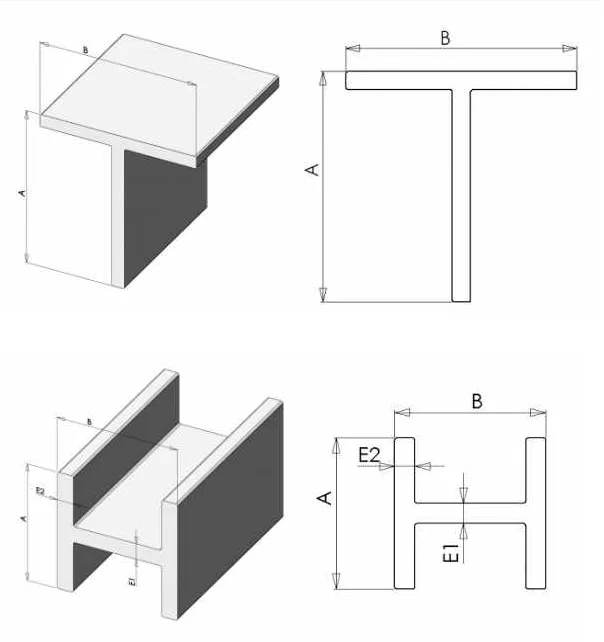
On secondary façade frames and joinery, BORGLASS® composite profiles eliminate the thermal bridges that metal frames allow, whilst offering complete aesthetic customisation (wood or stone effect, logos, paint) and a weight up to four times lighter than steel, which simplifies installation at height, lightens existing structures and reduces the manpower and equipment required for handling on site.
ISSUE
- Conventional steel frames conduct heat and create thermal bridges that impair the energy performance of the building envelope, with a direct impact on energy consumption and compliance with the building’s thermal requirements
- Standard façade materials limit aesthetic possibilities (uniform appearance, limited colour range), making it necessary to use costly cladding whenever a project requires a wood or stone effect, a logo or a specific colour
- The weight of traditional framework makes installation at height more difficult and places an additional load on existing structures during renovation, thereby increasing handling costs
- The handling of metal components on construction sites – including loading, carrying, lifting and positioning – requires heavy machinery (cranes, aerial work platforms, forklift trucks) and a large number of operators. Manual handling is the leading cause of work-related accidents resulting in time off work in the construction sector, and the resulting musculoskeletal disorders (MSDs)
BORFLEX SOLUTIONS
- BORGLASS® composite profiles, integrated directly into the secondary framework, eliminate the thermal bridge at source
- Customisable surface finish (wood-effect, stone-effect, logo integration) applied in the factory, with the option for the user to paint the profile themselves in a wide range of colours
- A composite material that is significantly lighter than steel or aluminium, whilst very often offering equivalent performance, thereby reducing the load on existing structures and enabling installation at height using simpler lifting equipment
- Resistant to the elements, UV light and moisture without the need for additional treatment, thereby eliminating the maintenance cycles (painting, anti-corrosion treatment) associated with exposed metal frameworks
- BORGLASS® composite profiles are up to four times lighter than steel of the same cross-section, enabling, for many components, to be handled manually by a smaller team without the need for lifting equipment, thereby reducing both the teams’ exposure to handling risks and the costs associated with managing lifting equipment
WHAT IT OFFERS
By replacing the secondary metal framework with a BORGLASS® composite profile, the thermal bridge is eliminated without the need for additional insulation, which simplifies the design of the building envelope and ensures the expected thermal performance. The customisable surface cladding allows the framework and its visible appearance to be finished in a single operation, avoiding the additional cladding usually required whenever an architectural project deviates from the standard.
In terms of installation, the composite’s light weight reduces the load placed on existing structures – a factor that often acts as a bottleneck in major renovation projects – and facilitates installation at height, where every kilo less on the framework translates into increased productivity during hoisting. Furthermore, its resistance to weathering, UV rays and moisture without the need for additional protection eliminates the recurring maintenance cycles required for exposed metal frameworks, which has a direct impact on long-term running costs.
This same lightness also transforms the management of both personnel and equipment on site. Components that previously required several operators and a dedicated lifting machine can, in many cases, be moved and installed by a smaller team, by hand and in compliance with regulatory limits on manual handling. This development results in reduced labour requirements, less need to hire lifting equipment, shorter installation times and reduced exposure of teams to musculoskeletal disorders (MSDs) and handling-related accidents.